Pure. Simple. Naturally Sweet.
Honey is one of nature’s most recognizable foods. With its golden color, distinctive sweetness and remarkable journey from flower to hive to table, honey has been enjoyed by people around the world for generations.
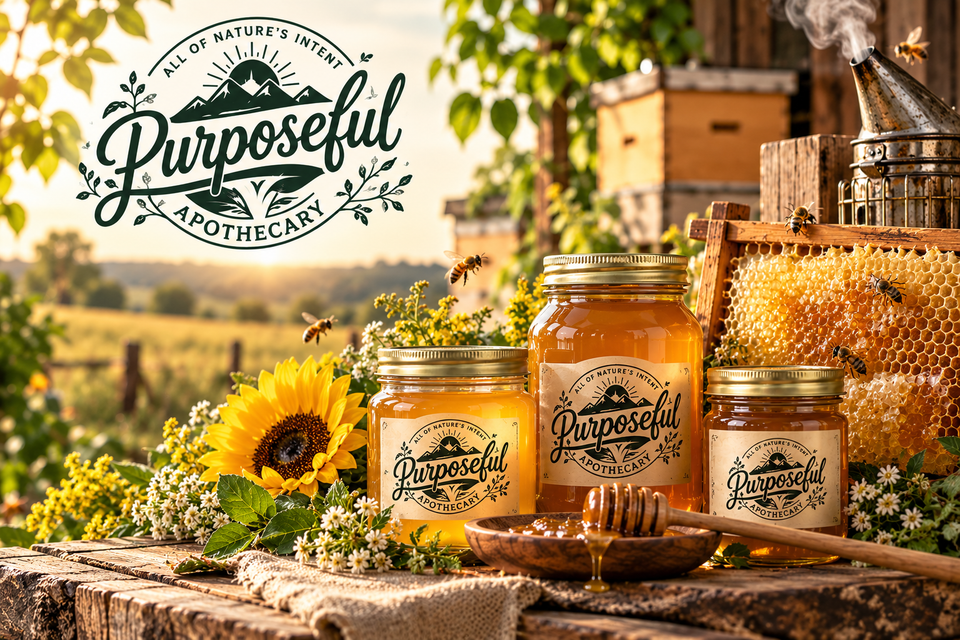
At Purposeful Apothecary, honey is also an important part of the product collection. Purposeful’s honey is sourced from beekeepers in North Dakota, connecting this natural food with the agricultural communities and landscapes of the region.
But have you ever wondered how honey actually gets from a flower into the jar?
It All Begins With the Bees
Honey begins with flowering plants.
Honeybees visit flowers and collect nectar, carrying it back to the hive. Inside the colony, the nectar is transferred among bees and gradually transformed as moisture is reduced.
The bees place the developing honey into the familiar hexagonal cells of the honeycomb. As more moisture evaporates and the honey reaches the appropriate consistency, the cells can be capped with beeswax.
For beekeepers, those filled honeycombs represent the culmination of an extraordinary partnership between bees, flowering plants, the environment and careful hive management.
Why Doesn't Every Honey Look or Taste the Same?
Take a close look at different jars of honey and you may notice something interesting.
Some honey is pale and golden. Other honey can be deep amber. The aroma and flavor can also vary.
One reason is that nectar comes from different flowers and plants. Geography, season and the plants available to foraging bees can all influence the characteristics of honey.
That's part of what makes honey such an interesting natural food—variation is normal.
Rather than expecting every harvest to be identical, differences in color, aroma and flavor can be part of honey's connection to the landscape from which it came.
What About Crystallized Honey?
If you've ever opened a jar of honey and discovered that it has become cloudy, thick or grainy, you may have wondered:
Has my honey gone bad?
Not necessarily.
Crystallization is a natural process that can occur in honey. Honey contains naturally occurring sugars, primarily glucose and fructose. Over time, glucose can separate from the liquid portion and form crystals.
Different honeys can crystallize at different rates depending on their natural composition and storage conditions.
So seeing crystals develop isn't automatically a reason to throw your honey away.
If you prefer a more liquid consistency, gently warming the container in warm water can help dissolve the crystals. Avoid excessive heat, and follow any storage instructions provided with the product.
Simple Ways to Enjoy Honey
One of the reasons honey has remained popular for so long is its versatility.
A spoonful can add natural sweetness and distinctive flavor to all kinds of foods and drinks.
Try honey:
- Stirred into warm tea
- Drizzled over oatmeal or yogurt
- Added to smoothies
- Served with fresh fruit
- Drizzled over toast or biscuits
- Used in marinades and dressings
- Incorporated into baking and cooking
- Paired with cheeses, nuts and fruit
And sometimes, the simplest way to enjoy it is straight from the spoon.
How Should Honey Be Stored?
Honey is generally best kept tightly sealed at room temperature in a dry location, away from unnecessary heat and moisture.
Refrigeration usually isn't necessary and can encourage crystallization.
Always keep the container clean and properly closed, and follow any specific storage instructions provided with the product.
North Dakota Honey. Purposefully Chosen.
For Purposeful Apothecary, choosing products isn't simply about filling shelves.
It's about bringing together products and ingredients that fit a broader philosophy of nature, intentional living and community.
Sourcing honey from North Dakota beekeepers creates another connection between Purposeful and the region where the business has grown.
From the flowers visited by the bees to the beekeeper tending the hives and ultimately to the jar that reaches your table, there's a story behind every harvest.
From hive to home, naturally sweet—with purpose.
Taste the Purpose
Discover Purposeful Apothecary's selection of honey sourced from North Dakota beekeepers.