Black Walnut, Clove & Wormwood: Exploring a Traditional Herbal Blend
Herbal traditions have used plants for generations as part of everyday wellness practices. Purposeful Apothecary's Parasite Detox brings together three botanicals commonly associated with traditional herbal preparations: black walnut, clove and wormwood.
Rather than thinking of this product as a conventional medicine, it is helpful to understand the ingredients, their history in herbal practice, and why they are sometimes combined in botanical tinctures.
What Is This Blend Traditionally Used For?
Black walnut, wormwood and clove have a history of use in traditional herbal preparations, particularly those associated with digestive and gastrointestinal wellness.
You may also see blends containing these herbs marketed elsewhere as “parasite cleanses” or “detox” formulas. However, traditional use should not be confused with proof that a product can diagnose, treat or eliminate a parasitic infection.
If someone believes they may actually have a parasite, the appropriate next step is medical evaluation rather than relying on an herbal cleanse.
Black Walnut
Black walnut (Juglans nigra) is a tree native to North America. Various parts of the plant—particularly the green outer hull—have a long history of use in traditional herbal preparations.
In modern herbalism, black walnut is frequently included in botanical blends associated with digestive wellness and cleansing traditions.
Wormwood
Wormwood (Artemisia absinthium) is an aromatic herb with a long history of traditional use.
Historically, wormwood has been used in herbal preparations associated with digestion and gastrointestinal comfort. Its strong botanical compounds are also one reason it should be used thoughtfully rather than treated like an everyday culinary herb.
Clove
Clove (Syzygium aromaticum) is the familiar aromatic spice produced from dried flower buds of the clove tree.
Beyond its culinary use, clove has a long history in traditional herbal practices. One of its best-known naturally occurring compounds is eugenol, which has been widely studied for its biological properties.
Why Use a Tincture?
A tincture is a concentrated liquid herbal preparation in which plant material is extracted into a liquid—commonly alcohol.
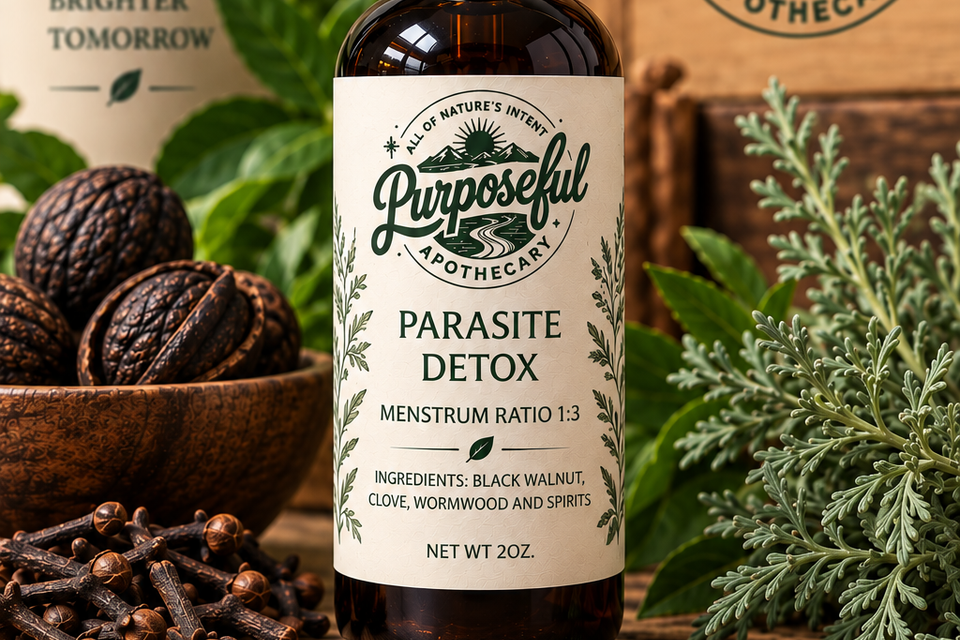
Tinctures provide a convenient way of preparing and using botanical ingredients in relatively small amounts. The Purposeful Apothecary product shown here lists a 1:3 menstruum ratio and contains black walnut, clove, wormwood and spirits.
How Is Parasite Detox Used?