Discovering the Plants Behind the Products
Long before the shelves of today's wellness stores were filled with bottles, powders, teas, and supplements, people around the world were learning about the plants growing around them.
Leaves, flowers, roots, bark, seeds, and fruits have been used in foods, beverages, cultural traditions, and plant preparations for generations.
Today, that connection with the plant world continues through something you may hear frequently at an apothecary:
Botanicals.
But what exactly does that mean?
What Is a Botanical?
Simply put, a botanical is a plant or plant-derived material.
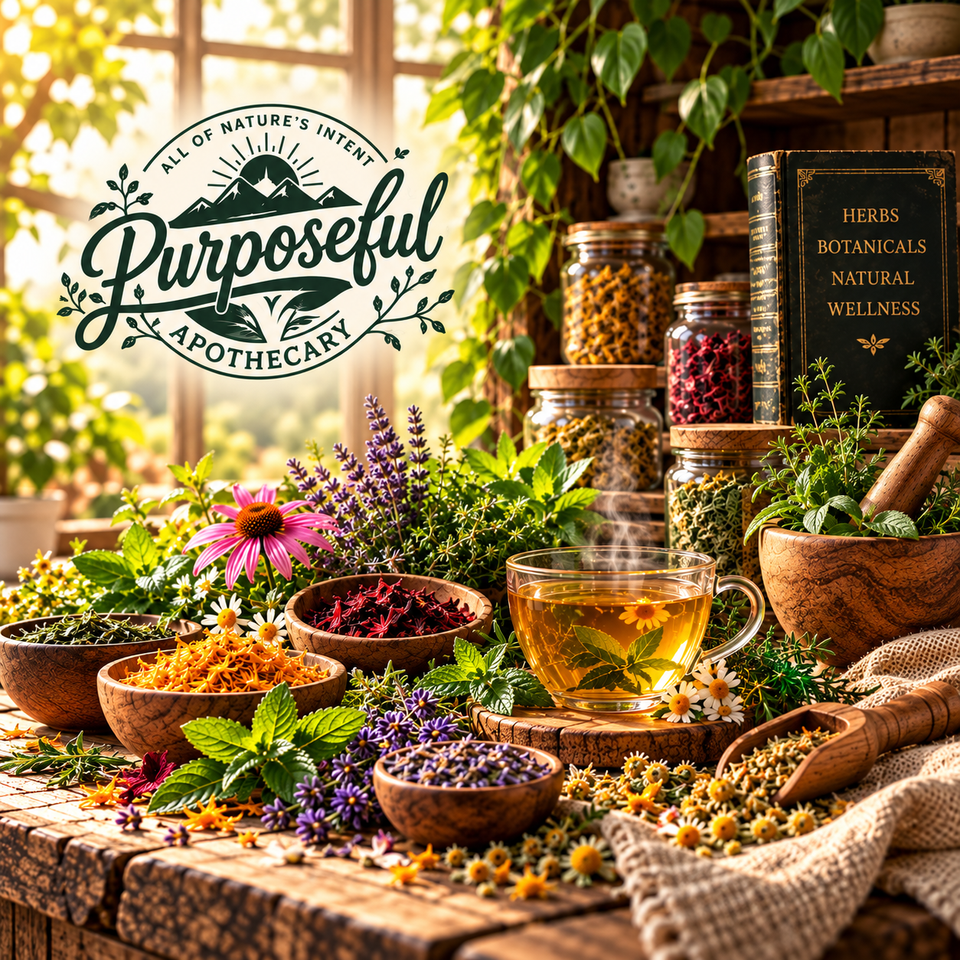
Depending on the plant and its intended use, different parts may be collected and prepared, including:
- Leaves
- Flowers
- Roots
- Seeds
- Bark
- Fruits
- Stems
You probably encounter botanicals more often than you realize.
Peppermint leaves steeped into tea, ginger root incorporated into a drink, hibiscus flowers used in a colorful beverage, and herbs used to season food are all examples of people using plants in everyday life.
From Plant to Preparation
One of the fascinating things about herbs and botanicals is the number of ways they can be prepared.
Herbal Teas
One of the most familiar methods is steeping plant material in water.
Leaves, flowers, roots, and other ingredients can be used individually or combined into herbal tea blends.
The preparation method can vary depending on the ingredients, which is why following the directions for a particular product is important.
Dried Herbs
Drying herbs allows plant material to be stored and used later.
Dried herbs may be used for teas, culinary purposes, botanical preparations, or other traditional uses depending on the particular plant.
Tinctures
As we explored in our Beginner's Guide to Herbal Tinctures, plant material can also be used to create concentrated liquid extracts.
Different tinctures can contain different botanicals and extraction liquids, so reading the product label is particularly important.
Foods & Beverages
Botanicals aren't limited to teas and tinctures.
Fruits, roots, herbs, flowers, and spices can also appear in foods, juices, lemonades, and other beverages.
That's one reason the worlds of food, plants, and the modern apothecary often overlap.
Getting to Know Your Ingredients
Part of intentional living is simply becoming more curious about what's inside the products you use.
Instead of seeing a label that says herbal blend and stopping there, ask:
Which herbs are included?
Which part of the plant is being used?
How was it prepared?
Where did the ingredient come from?
How does the manufacturer recommend using it?
Learning doesn't have to be complicated.
Sometimes it starts by turning the bottle around and reading the ingredient list.
Natural Doesn't Mean Risk-Free
Plants contain naturally occurring compounds, and some herbs can interact with medications or may not be appropriate for everyone.
That's especially important with concentrated herbal products.
Pregnancy, breastfeeding, medications, existing medical conditions, allergies, and other individual factors can affect whether a botanical product is appropriate for someone.
When you're uncertain about an herbal product, speaking with a qualified healthcare professional is a sensible next step.
Being interested in natural products and being informed about them should go hand in hand.
Herbs, Botanicals & the Modern Apothecary
This brings us back to the idea behind the apothecary.
The modern wellness apothecary creates a place where people can discover herbs, teas, botanicals, tinctures, natural foods, and other plant-inspired products while also learning more about what they're choosing.
For Purposeful Apothecary, that's an important part of the journey.
It's not simply about selling another herb, tea, or bottle.
It's about encouraging curiosity about ingredients, nature, traditions, and the products people incorporate into their everyday lives.
Getting Back to Nature
You don't need to become an herbal expert overnight.
Start small.
Learn about an herb you already enjoy. Discover what's in your favorite tea. Find out what gives a botanical drink its color or flavor. Read ingredient labels and ask questions.
The more we understand where our ingredients come from, the more intentional we can become about the choices we make.
Nature gives us plenty to discover. Purpose begins with understanding it.
Explore Nature With Purpose
Discover Purposeful Apothecary's selection of herbs, teas, botanicals, tinctures, and thoughtfully selected natural products.
EXPLORE HERBS & BOTANICALS →
Educational Disclaimer: This information is provided for general educational purposes only and is not intended to diagnose, treat, cure, or prevent any disease or replace advice from a qualified healthcare professional.